Program-aware entry
Trial and insurer codes can route users into the right partner experience from the start.
Fills, visits, and study touchpoints are episodic. Medication routines are daily. MedSpark gives partner programs a patient-friendly layer for reminders, self-reported intention check-ins, rewards, and cohort-level visibility into logged routine consistency. It does not verify ingestion or promise clinical or economic outcomes.
MedSpark is designed to add a repeatable engagement loop between fills, visits, and research touchpoints while giving partner programs visibility into self-reported routine consistency.
Published U.S. market context from CDC. These figures do not estimate MedSpark impact, savings, or outcomes.
The business case changes by partner. The role does not: give people a reason to return to the medication routine and give your program a clearer view of consistency between the moments your team already owns.
Pickup is a moment. The medication routine continues long after the bag leaves the counter.
Pharmacies sit closest to the fill and refill moment. CDC notes that one in five new prescriptions are never filled and, among filled medications, roughly half are not taken as directed, contributing to a large national cost burden.
These figures describe published market context. They do not estimate savings or outcomes from MedSpark.
Trial and insurer codes can route users into the right partner experience from the start.
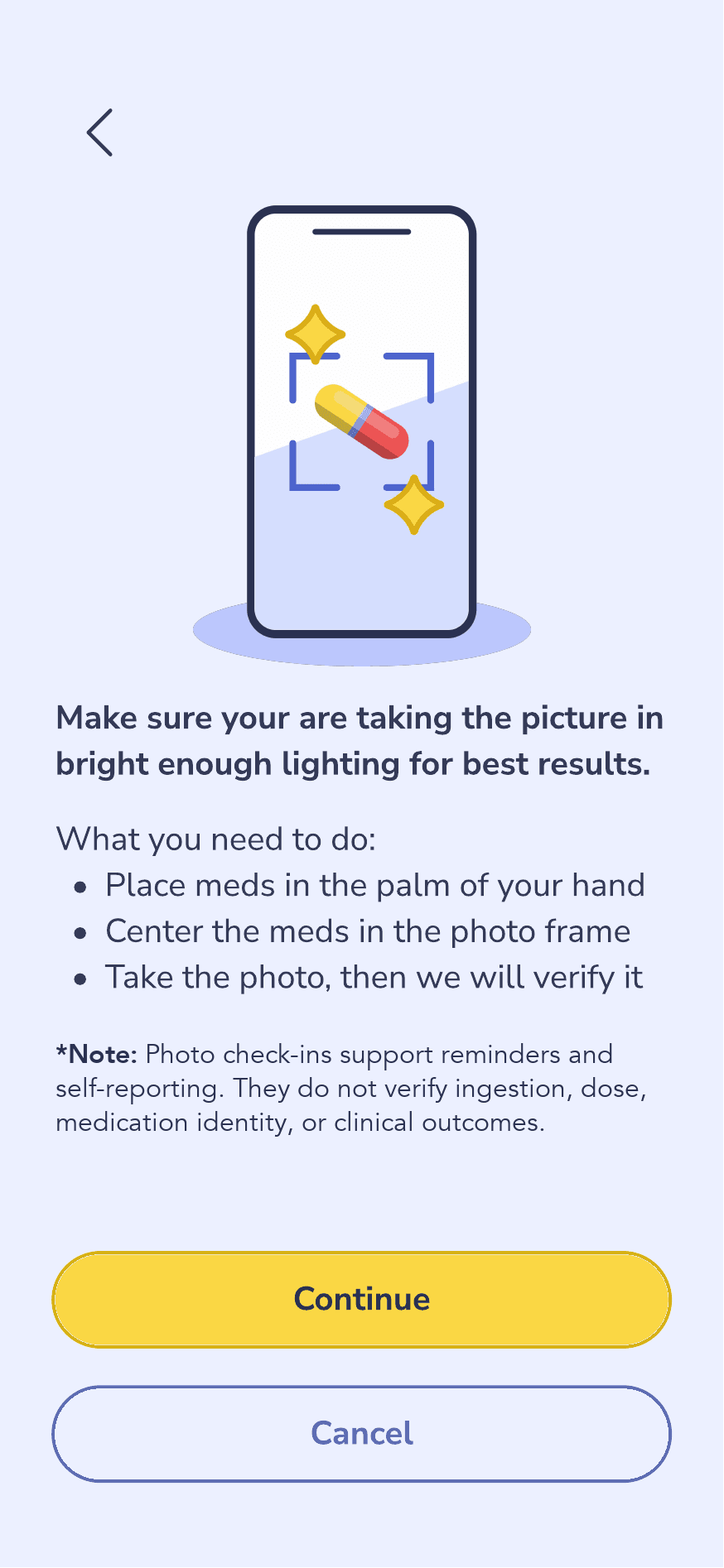
Partners can establish cohorts and follow photo or confirmation check-ins over time as a self-reported adherence proxy.
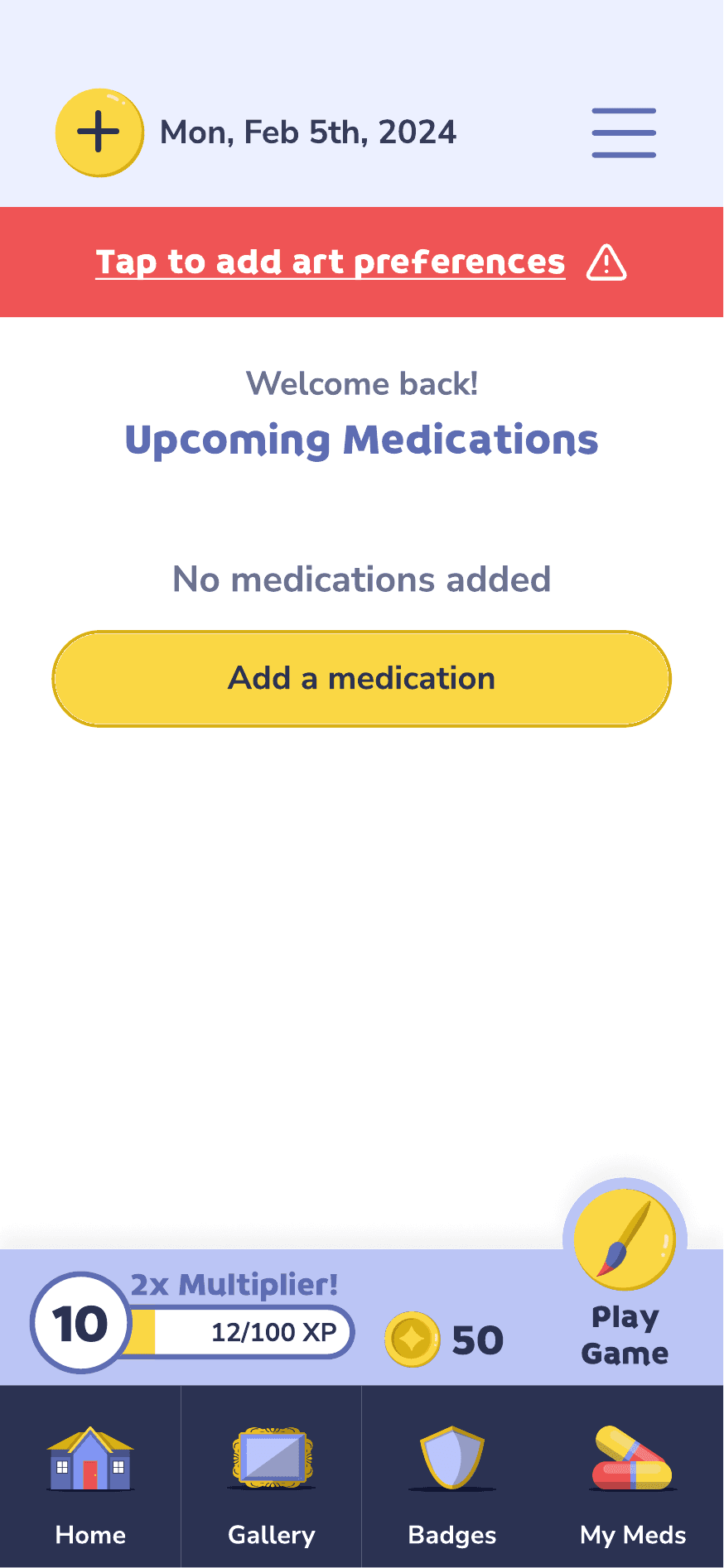
Patients can create medication schedules, reminder windows, and recurring routines.
A photo of medicine in hand can act as a proxy for intention to take a dose. It is not proof of ingestion, correct dose, or outcome.
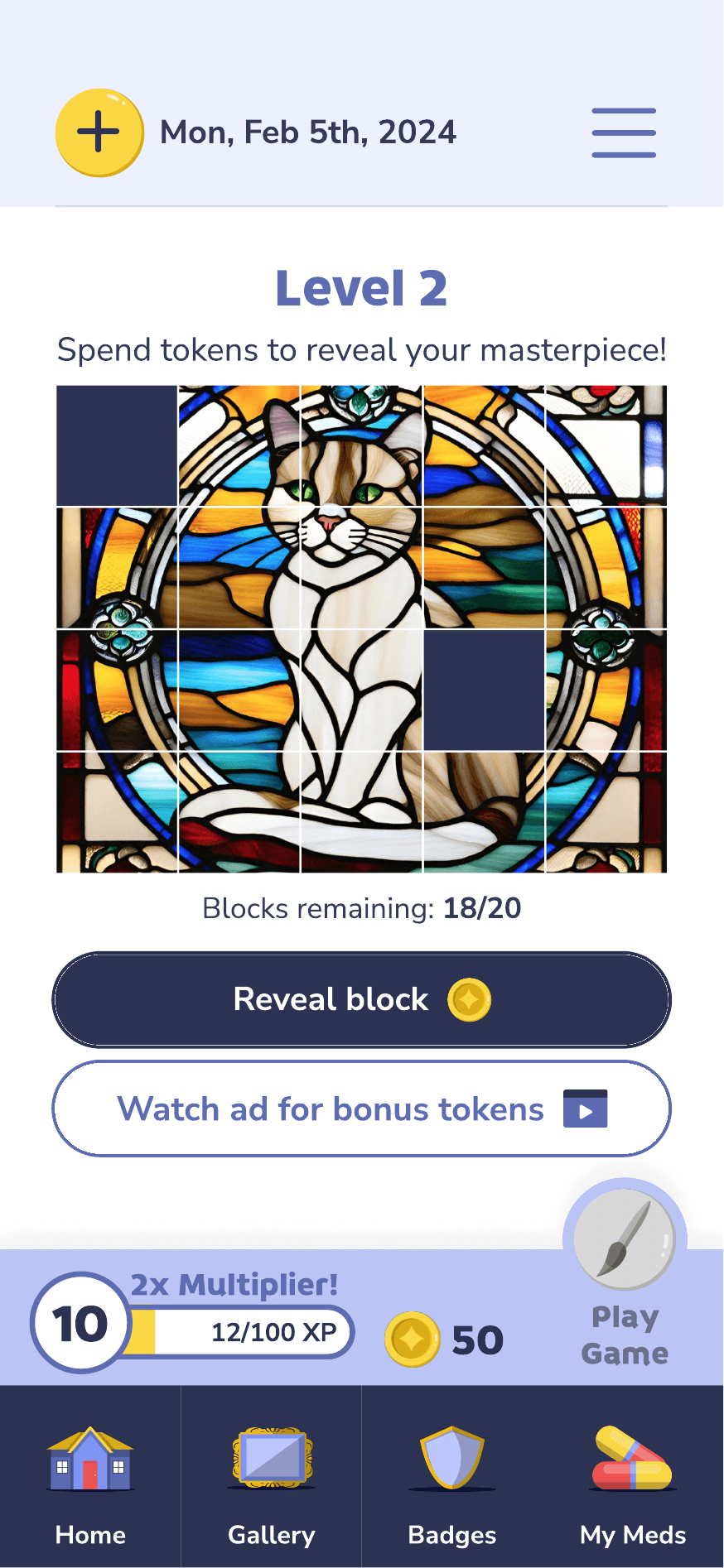
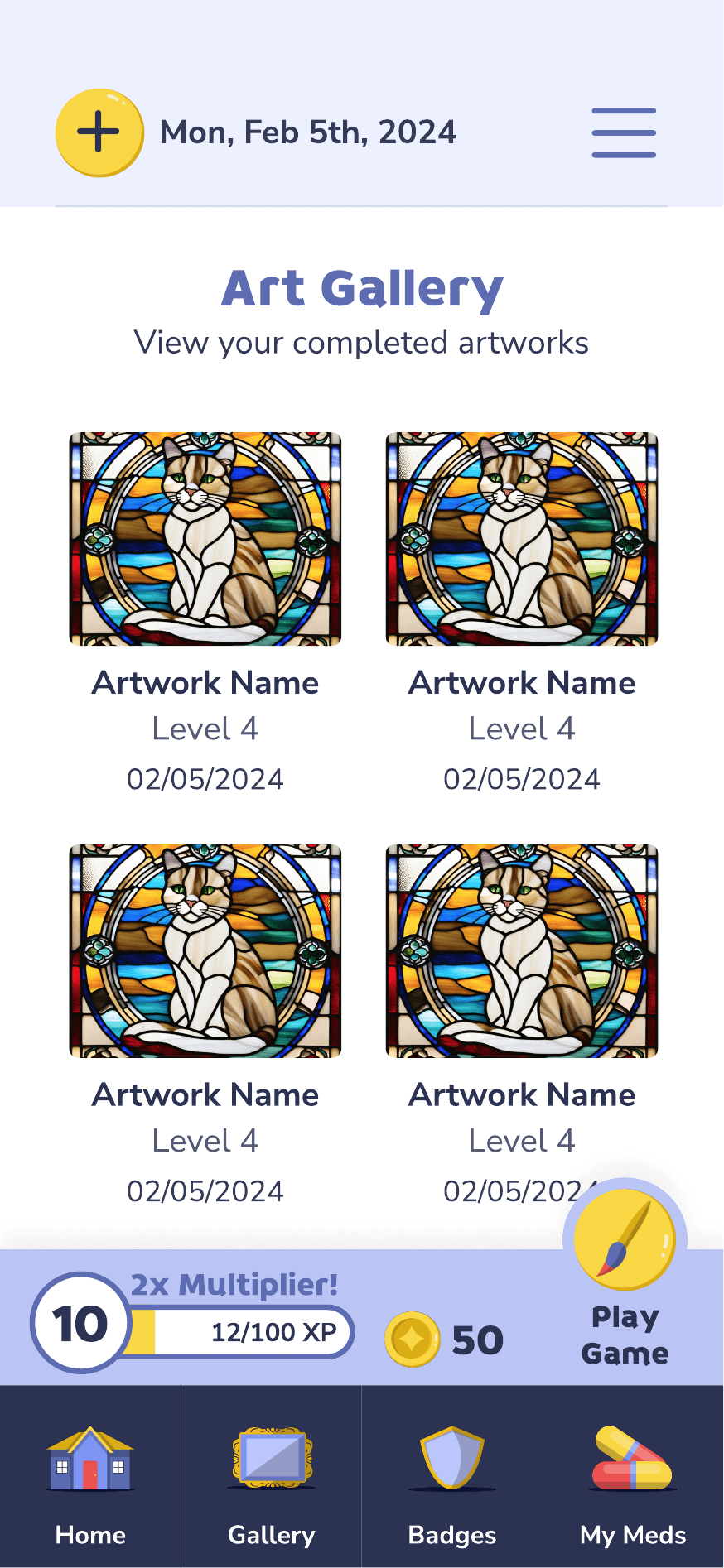
XP, badges, tokens, and artwork give patients a reason to return without turning care into noise.
These studies support the importance of reminders, engagement, and adherence interventions generally. They do not mean MedSpark is a medical device, that a photo confirms ingestion, or that any partner program is guaranteed to produce clinical or economic outcomes.
MedSpark is designed as a wellness and adherence-support tool, not as a medical device or substitute for clinical judgment. Photo check-ins and simple confirmations create self-reported routine events that can be summarized across a defined cohort. They do not identify the medication, validate the dose, verify ingestion, or establish clinical adherence or outcomes.